
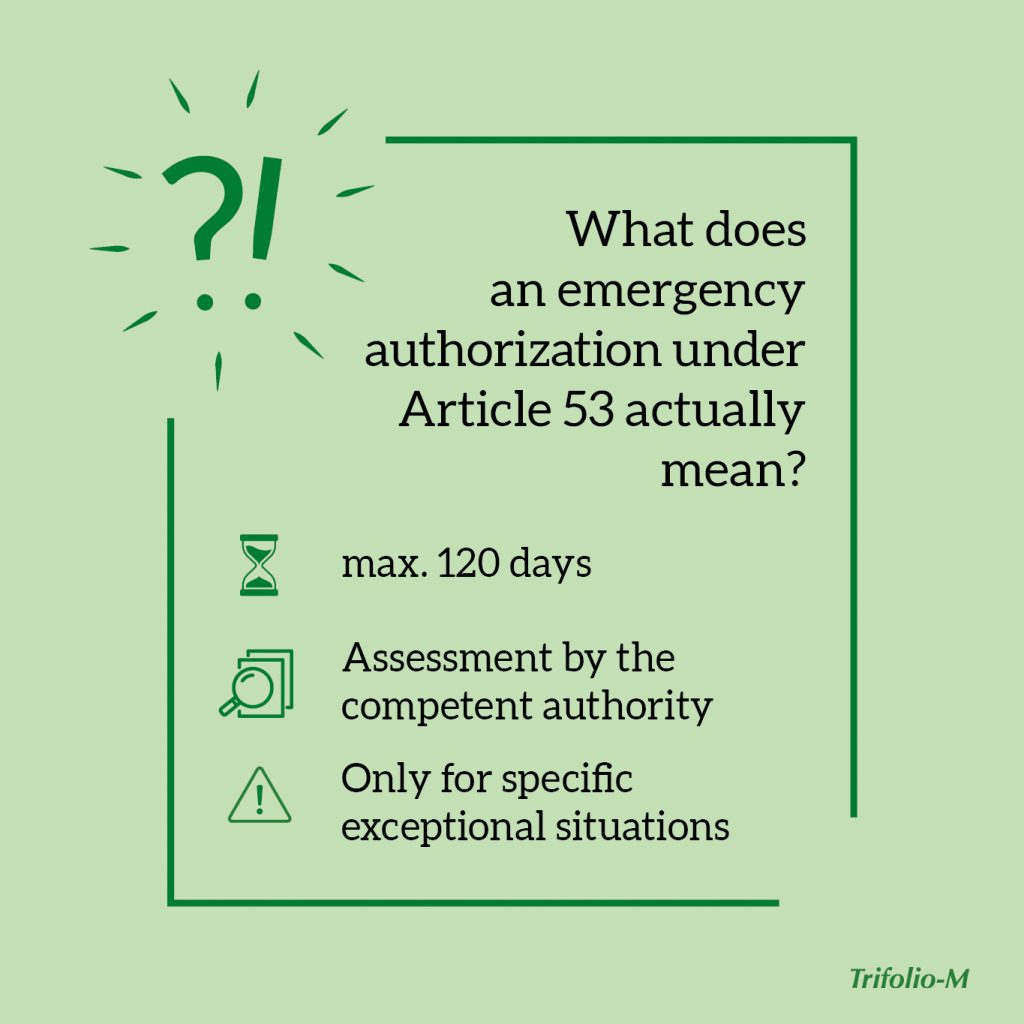
Not every plant protection challenge can be addressed with regularly authorized plant protection products. In specific exceptional situations, the competent authorities in EU Member States — in Germany, the Federal Office of Consumer Protection and Food Safety (BVL) — may therefore grant an emergency authorization under Article 53 of Regulation (EC) No. 1107/2009. A prerequisite is that a threat to crops cannot be adequately contained by other means. The authorization is limited to a maximum of 120 days and is subject to clearly defined conditions, with the protection of human health being a primary consideration.
Reasons for an emergency authorization may include newly emerging harmful organisms, increasing resistance development, or the withdrawal of previously available active substances at EU level.
However, an emergency authorization does not necessarily mean that a new plant protection product is being authorized at short notice. The BVL also thoroughly assesses the potential effects on human health and the environment in the case of emergency authorizations and, where necessary, specifies appropriate conditions of use.
An emergency authorization may also permit the limited use of an already authorized plant protection product on a different crop or against a different harmful organism for which the product does not yet have an authorization. Emergency authorizations are therefore an important instrument for responding flexibly to exceptional plant protection challenges.
Biological plant protection products can also receive emergency authorizations. A current example is NeemAzal®-T/S, for which temporary uses under Article 53 have been authorized in several European countries this year. This illustrates the importance of emergency authorizations as a tool for responding quickly to specific or unexpected plant protection challenges.